
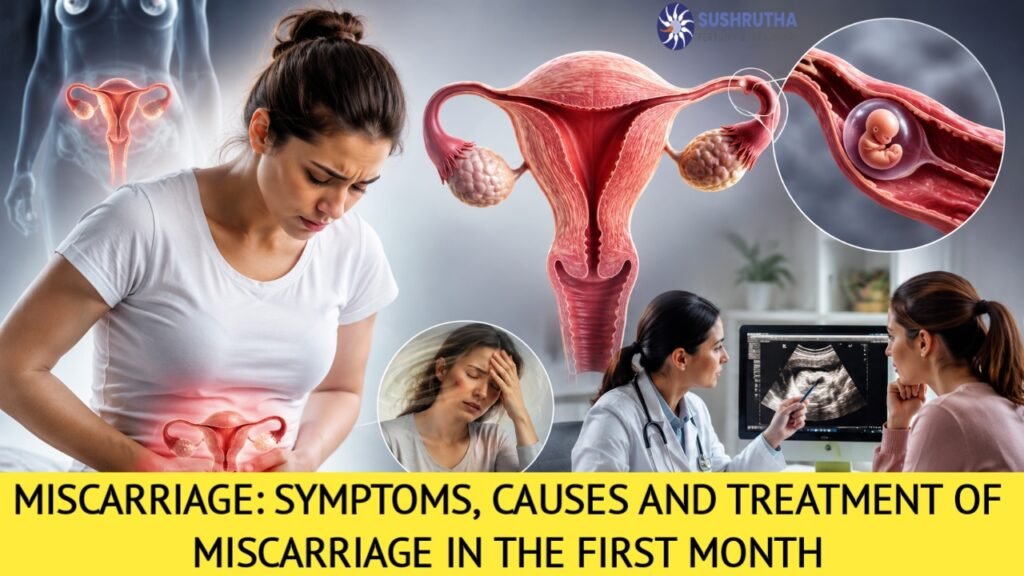
Miscarriage: Symptoms, Causes and Treatment of Miscarriage in the First Month Finding out you’re pregnant can be one of life’s most joyful moments. But this beautiful
journey does not always go as planned. For many women, early pregnancy comes with fears,
uncertainties, and sometimes heartbreaking loss. One of the most painful experiences a
woman can go through is a miscarriage — especially when it happens in the very first month.
If you’ve recently experienced pregnancy loss, or if you’re someone trying to understand what
happened to a loved one, this guide is for you. We’ll cover everything you need to know —
from the earliest symptoms of miscarriage in the first month, to the causes behind it, to
what treatment and recovery actually look like.
Because the more you understand, the better you can protect yourself — or simply find
comfort in knowing you’re not alone.
What Is a Miscarriage?
A miscarriage is the spontaneous loss of a pregnancy before the 20th week. It is not
something a woman causes. In most cases, it happens because something was not
developing as it should — and the body responds by ending the pregnancy on its own.
Miscarriages are more common than many people realize. Studies suggest that 10–20% of
all known pregnancies end in miscarriage, and the majority occur in the first trimester —
especially in the first month. Many women experience what is called a “chemical pregnancy,”
where a miscarriage happens so early that the woman may not have even confirmed her
pregnancy yet.
The difficult truth is this: signs of miscarriage can be very subtle in the early weeks, which
is why understanding them matters so much
Types of Miscarriage You Should Know About
Not all miscarriages look the same. Understanding the type helps you make sense of what is
happening — or what has already happened.
1. Missed Miscarriage
This is one of the most shocking types. The pregnancy has ended, but the woman’s body has
not yet registered the loss. There are no obvious symptoms — no bleeding, no cramps. The
woman may still feel pregnant. It is usually discovered during a routine ultrasound when no
fetal heartbeat is detected.
Note: This is most likely in the first month, since symptoms are already mild at that stage.
2. Threatened Miscarriage
In this case, there is bleeding and mild cramping, but the cervix remains closed and the
pregnancy is still intact. It does not always lead to a full miscarriage. Many women with a
threatened miscarriage go on to have completely healthy pregnancies with proper monitoring
and rest.
Note: This is very common in the first month and is often mistaken for implantation bleeding.
3. Complete Miscarriage
Here, the pregnancy has fully ended and the uterus has emptied itself. The woman typically
experiences heavy bleeding and the passage of tissue. A doctor confirms this with an
ultrasound showing an empty uterus.
4. Inevitable Miscarriage
Bleeding is heavy, cramping is intense, and the cervix has already begun to open. At this
point, stopping the miscarriage is generally not possible. The body has committed to ending
the pregnancy.
5. Recurrent Miscarriage
When a woman loses three or more pregnancies consecutively, it is called recurrent
miscarriage. This affects about 1–2% of women and usually has an identifiable underlying
cause — hormonal, genetic, or structural — that a specialist can investigate.
Symptoms of Miscarriage in the First Month
The tricky part about miscarriage in the very first month is that many of its symptoms can
overlap with normal early pregnancy symptoms. Here is what to watch for.
Heavy or Sudden Vaginal Bleeding
Light spotting can be completely normal in early pregnancy — it is often just implantation
bleeding. But heavy bleeding, especially with bright red blood, is a warning sign. If you’re soaking through pads or passing clots, seek medical help immediately. This is one of the most
common and most urgent early miscarriage symptoms.
Severe Abdominal or Pelvic Cramping
Mild cramps during early pregnancy are expected as the uterus adjusts. But intense,
persistent cramping — especially in the lower abdomen — that feels worse than your heaviest
period cramps is a red flag. The pain may come in waves and can be accompanied by lower
back pain.
Passage of Tissue or Blood Clots
Passing grey, pink, or white tissue from the vagina along with blood clots is a serious sign that
a miscarriage may be in progress or has already occurred. Do not ignore this. If you can, save
any tissue in a clean container for your doctor to examine.
Lower Back Pain
A dull to severe ache in the lower back, especially when paired with abdominal cramping or
bleeding, can indicate that the uterus is contracting as it tries to expel the pregnancy.
Sudden Disappearance of Pregnancy Symptoms
Nausea, breast tenderness, fatigue — these are all signs that your body is producing
pregnancy hormones. If these symptoms suddenly and completely vanish — especially before
the 12-week mark — it could indicate that hCG levels have dropped, which sometimes signals
pregnancy loss.
Important: The absence of symptoms alone is not a definitive sign of miscarriage. Some
women naturally experience lighter symptoms. Always consult your doctor before drawing
conclusions.
What Causes Miscarriage in the First Month?
Understanding the cause of a miscarriage can be one of the hardest parts of the experience
— because often, there is no single, fixable reason. But knowing the common causes can
help you process what happened and prepare better for the future.
1. Chromosomal Abnormalities
This is the leading cause of early miscarriage, responsible for roughly 50–70% of first-trimester losses. During fertilization, the embryo sometimes ends up with an incorrect number of chromosomes. This makes healthy development impossible and the body naturally
ends the pregnancy. This is not caused by anything the mother did.
2. Hormonal Imbalances
Hormones such as progesterone play a critical role in maintaining a pregnancy in its early
weeks. Conditions like polycystic ovary syndrome (PCOS), thyroid disorders, or low
progesterone levels can prevent proper implantation and development of the embryo.
3. Infections
Certain infections — including bacterial vaginosis, urinary tract infections, and some sexually
transmitted infections — can trigger inflammation that disrupts early pregnancy. This is one
reason why preconception health checkups are so important.
4. Uterine or Cervical Issues
Structural problems with the uterus, such as fibroids, polyps, a uterine septum, or an irregular
shape, can interfere with embryo implantation. An incompetent cervix — where the cervix
begins to open prematurely — is a less common but serious cause, more often linked to
second-trimester losses.
5. Maternal Health Conditions
Pre-existing health conditions in the mother — such as uncontrolled diabetes, high blood
pressure, or autoimmune disorders — can significantly raise the risk of miscarriage.
Managing these conditions before and during pregnancy is absolutely essential.
6. Age
The older a woman is, the higher her risk of chromosomal abnormalities in her eggs:
- Under 35: approximately 15% risk
- 35–45: 20–35% risk
- Over 45: approximately 50% risk
7. Lifestyle Factors
Smoking, heavy alcohol consumption, recreational drug use, and very high caffeine intake
have all been linked to increased miscarriage risk. These are among the few preventable risk
factors.
8. Medications and Environmental Exposure
Some prescription drugs — including isotretinoin (used for acne) and certain NSAIDs — can
be harmful during early pregnancy. Exposure to radiation, pesticides, or industrial chemicals
also poses a risk. Always check with your doctor before taking any medication during
pregnancy.
Treatment After a Miscarriage: What Happens Next
After a miscarriage is confirmed, the focus shifts to two things: managing the physical
process and supporting recovery — both physical and emotional.
Medical Management Options
Depending on the type and stage, your doctor may recommend one of three approaches:
- Expectant management: Waiting for the body to complete the process naturally. This
can take days to weeks. - Medical management: Taking medication (usually misoprostol) to help the uterus
empty more quickly. - Surgical management (D&C): A dilation and curettage procedure in which the uterine
lining is gently cleared. Recommended when the miscarriage is incomplete or when there
are signs of infection.
Physical Recovery
Most women physically recover from an early miscarriage within one to two weeks. During
recovery, avoid:
- Sexual intercourse for at least 1–2 weeks
- Tampons or douching (use pads instead)
- Heavy lifting or vigorous exercise
- Ignoring symptoms like high fever, foul-smelling discharge, or worsening pain — these
need immediate medical attention
Emotional Support
A miscarriage is a real loss, and grief is a normal and healthy response. There is no timeline
for how long it should take to feel better. Talk to a trusted friend, partner, or family member. Consider joining a support group or speaking to a counselor who specializes in reproductive
trauma. Do not feel pressure to “move on quickly” — give yourself the time and space you
need.
Miscarriage: Symptoms, Causes and Treatment of Miscarriage in the First Month How to Reduce Your Risk of Miscarriage
Adopt a Pregnancy-Friendly Lifestyle
- Eat a balanced diet rich in folate, iron, and calcium
- Take a prenatal vitamin with folic acid (ideally starting 3 months before conception)
- Maintain a healthy weight — both underweight and overweight status can affect
pregnancy - Quit smoking and eliminate alcohol entirely
Manage Existing Health Conditions
If you have diabetes, thyroid disease, PCOS, hypertension, or any autoimmune condition,
work closely with your doctor to get these under control before and during pregnancy.
Start Prenatal Care Early
Early prenatal care is one of the most powerful tools you have. Your doctor can identify risk
factors, monitor fetal development, and offer timely interventions if needed. Don’t wait until 8
or 10 weeks to make your first appointment — the earlier, the better.
When to See a Doctor Immediately
Do not wait or self-monitor if you experience any of the following:
- Heavy bleeding — soaking more than one pad per hour for two or more hours
- Severe abdominal or pelvic pain not relieved by rest
- Fever above 38°C (100.4°F) with any pregnancy-related symptoms
- Passage of tissue from the vagina
- Dizziness, fainting, or a racing heartbeat alongside bleeding
Miscarriage Symptoms, Causes and Treatment of Miscarriage in the First Month (FAQs)
When do most miscarriages occur?
About 80% of miscarriages occur in the first trimester — most before the 12th week of
pregnancy. Early losses are most common because chromosomal problems in the embryo
are most likely to be detected and ended by the body in the early weeks.
How many miscarriages are considered normal?
One miscarriage is unfortunately common — roughly 10–20% of known pregnancies end this
way. A second miscarriage warrants a conversation with your doctor. Three or more
consecutive miscarriages — called recurrent pregnancy loss — require a thorough medical
investigation.
Can I get pregnant again after a miscarriage?
Yes. The majority of women who experience even multiple miscarriages go on to have
successful pregnancies. After one miscarriage, the chance of a healthy next pregnancy is very
high. With recurrent miscarriage, identifying and treating the underlying cause significantly
improves outcomes.
How soon can I try again after a miscarriage?
Most doctors recommend waiting until after at least one normal menstrual period before trying
again — both to allow physical healing and to better date a future pregnancy. However,
individual recommendations can vary, so always follow your doctor’s guidance.
What should I avoid eating during pregnancy?
Avoid raw or undercooked meat and seafood, unpasteurized dairy products, high-mercury fish
(like shark and swordfish), raw eggs, and deli meats unless thoroughly heated. Limit caffeine
to under 200 mg per day and avoid alcohol entirely.
Does stress cause miscarriage?
Everyday stress is not believed to directly cause miscarriage. However, extreme physical or
emotional stress can affect the hormonal environment of pregnancy. Managing stress through
rest, support, and self-care is still important — not because it will necessarily prevent loss, but
because your wellbeing matters.
What is the difference between a miscarriage and an ectopic pregnancy?
An ectopic pregnancy occurs when the fertilized egg implants outside the uterus — usually in
the fallopian tube. This is a medical emergency and requires immediate treatment. Symptoms
overlap with miscarriage (bleeding, cramping) but ectopic pregnancies also often cause sharp
one-sided pain. If in doubt, go to the emergency room immediately.
Final Thoughts
Miscarriage — especially in the first month — is one of the most quietly common yet deeply
painful experiences in reproductive health. It affects women of all ages, backgrounds, and
health levels. And despite how common it is, it is still something that many women suffer
through in silence, unsure of what they’re feeling or why.
If you have gone through this, know that it was not your fault. Know that what you’re feeling —
grief, confusion, anger, or numbness — is valid. And know that with the right information, the
right medical support, and the right emotional care, most women do go on to have healthy
pregnancies.
Take care of your body. Seek support for your mind. And never hesitate to ask your doctor
questions — no question about your pregnancy is too small.