
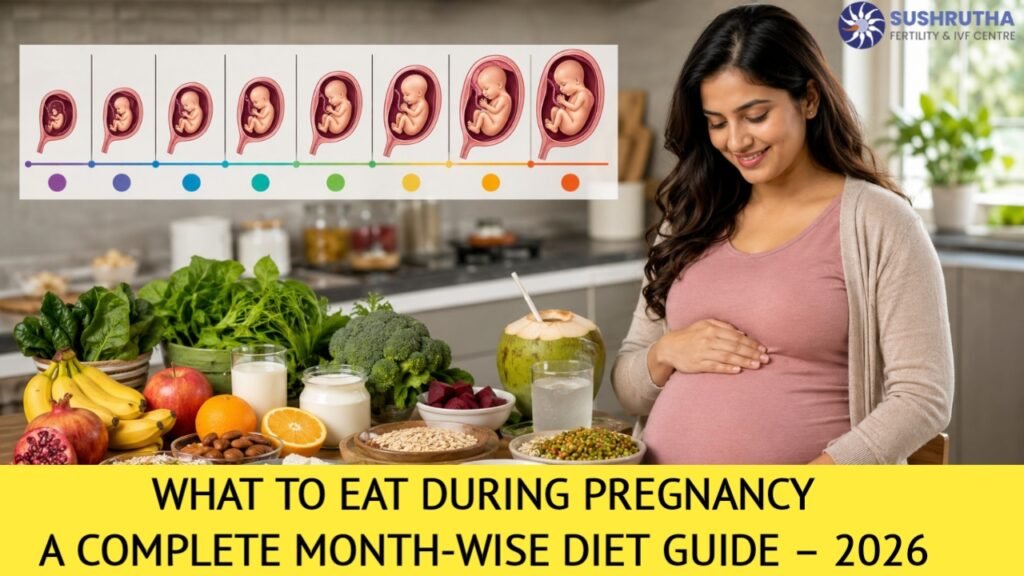
What to Eat During Pregnancy A Complete Month-Wise Diet Guide – 2026
Pregnancy is one of the most beautiful yet most confusing phases of a woman’s life. You’re eating for two — but what exactly should you eat? Every aunty, every neighbour, every Google result says something different. And the result? Total confusion.
So let’s settle it once and for all. This is your complete, month-wise pregnancy diet guide for 2026 — written simply, practically, and based on what actually works. Whether you’re in your first trimester or counting days till delivery, this guide covers what to eat during pregnancy, what to avoid, and how to keep both you and your baby healthy throughout.
What to Eat During Pregnancy – The Basics First
Before we go month-by-month, understand one thing: pregnancy diet is not about eating more, it’s about eating right.
Your daily plate should include:
- Protein – lentils, eggs, paneer, sprouts
- Calcium – milk, yogurt, ragi, sesame seeds
- Iron – spinach, beetroot, jaggery, pomegranate
- Folic Acid – green leafy vegetables, oranges, whole grains
- Healthy Fats – ghee (in small amounts), soaked almonds, walnuts
- Fiber – oats, whole wheat roti, seasonal fruits
These six pillars don’t change much month to month — only the quantities and priorities shift.
What to Eat in the 1st Month of Pregnancy
The first month is when the baby’s neural tube starts forming. This is why folic acid is the #1 priority right now.
Include in your diet:
- Spinach, fenugreek, broccoli
- Oranges and pomegranate juice
- Fortified whole grain cereals
- Soaked almonds and walnuts (small portions)
Morning sickness may already begin. Keep your meals small and frequent — 5 to 6 times a day works much better than 3 big meals. Avoid heavy, oily food as it worsens nausea.
What to Eat in the 2nd Month of Pregnancy
Hormones are going crazy, and so is your stomach. Vomiting, fatigue, food aversions — this month is genuinely tough for many women.
Foods that help:
- Coconut water and nimbu pani (natural electrolytes)
- Banana and apple (easy to digest, settle nausea)
- Soaked almonds – 4 to 5 every morning
- Oats or daliya (light but filling)
Pro tip: Keep dry crackers or roasted makhana on your bedside table. Eating something small before you even get out of bed helps reduce morning sickness dramatically.
What to Eat in the 3rd Month of Pregnancy
By month three, the risk of miscarriage reduces and pregnancy becomes more stable. But your baby’s organs are actively forming — so protein intake becomes very important now.
Best foods for this month:
- Moong dal, masoor dal, chana dal
- Paneer and low-fat cheese
- Eggs (if you eat them) — boiled or scrambled
- Khichdi, daliya, light homemade sabzi
This is also the time to completely drop the junk food habit. No samosas, no chips, no cola — your baby’s foundation is being built right now.
What to Eat in the 4th Month of Pregnancy
Welcome to the second trimester — most women finally feel better here. The nausea fades, appetite returns, and your baby’s growth kicks into high gear.
Increase your calorie intake slightly with:
- Whole wheat roti with ghee (one small spoon is enough)
- Dal + rice + cooked vegetables — the classic thali works best
- Seasonal fruits like mango (if in season, in moderation)
- Milk — at least 1 to 2 glasses per day
Feeling hungrier between meals? Keep healthy snacks ready — roasted makhana, chana, a handful of mixed nuts, or a banana.
What to Eat in the 5th Month of Pregnancy
The baby’s bones and teeth are developing rapidly this month. That means calcium and iron are your two most important nutrients right now.
Top foods for month 5:
- Milk, yogurt, paneer (calcium)
- Ragi (finger millet) — one of the richest plant sources of calcium
- Jaggery + sesame (til) ladoos — iron + calcium combo
- Beetroot and pomegranate — natural iron boost
- Palak (spinach) sabzi or soup
Watch out for anemia. Fatigue, pale skin, and dizziness in this month often signal low hemoglobin. Pair iron-rich foods with Vitamin C (lemon, amla) to improve absorption.
What to Eat in the 6th Month of Pregnancy
Weight gain picks up in month six, energy needs rise, and swelling in the feet may begin. Your diet needs to keep up.
Focus on:
- Multigrain roti (more fiber, better digestion)
- Moong dal — easy to digest and protein-rich
- Boiled or steamed vegetables with minimal oil
- Dry fruits — especially dates, which are excellent for iron and energy
Drink more water. Dehydration at this stage worsens swelling and can lead to UTIs, which are already more common during pregnancy. Aim for 8 to 10 glasses daily.
What to Eat in the 7th Month of Pregnancy
The third trimester begins. Your baby is growing fast, your stomach space is shrinking, and digestion becomes sluggish. Smaller, more frequent meals are non-negotiable now.
Best foods:
- Light vegetable soups and dal soups
- Curd rice or khichdi — easy on the stomach
- Fruits like papaya (only fully ripe), apple, pear
- Omega-3 rich foods — walnuts, flaxseeds (alsi)
If you feel full quickly, don’t force large portions. Two bites of good food every 2 hours is better than one big meal you can’t digest.
What to Eat in the 8th Month of Pregnancy
Delivery is close. Your body is preparing, your baby is gaining final weight, and your digestive system needs all the help it can get.
Stick to light but nutritious options:
- Daliya (broken wheat porridge) and oats
- Coconut water and vegetable soups
- Steamed or boiled sabzis
- Fruits — ripe papaya, apple, pear, banana
Avoid heavy curries, fried food, and anything that causes gas or bloating. Constipation is common this month — fiber and water are your best friends.
What NOT to Eat During Pregnancy
This is just as important as knowing what to eat. Certain foods can cause serious harm during pregnancy.
Avoid these completely:
- Raw papaya and pineapple — can trigger uterine contractions
- Too much caffeine — no more than 200mg per day (roughly 1 cup of coffee)
- Undercooked eggs or meat — risk of salmonella and listeria
- Packaged and junk food — high in sodium, preservatives, and empty calories
- Excessively spicy or fried food — worsens acidity and heartburn
- Unpasteurized dairy — risk of harmful bacteria
Also be careful with food hygiene. Wash all fruits and vegetables thoroughly. Avoid street food or food stored for long hours.
5 Diet Tips Every Pregnant Woman Should Follow
- Eat every 2–3 hours — small portions, frequently. This manages nausea, keeps energy stable, and aids digestion.
- Never skip breakfast — your baby fasts overnight too. A nutritious breakfast is critical.
- Take your supplements seriously — folic acid, iron, calcium, and Vitamin D prescribed by your doctor are non-negotiable.
- Don’t diet or fast — pregnancy is the worst time to cut calories drastically. Nourish, don’t restrict.
- Eat home-cooked food as much as possible — you control the oil, salt, and hygiene.
What to Eat During Pregnancy A Complete Month-Wise Diet Guide (FAQs)
Q1. Which fruit is best during pregnancy?
Bananas (energy + potassium), pomegranate (iron), oranges (Vitamin C + folic acid), and fully ripe papaya (in small amounts) are excellent choices across all trimesters.
Q2. Can I eat rice during pregnancy?
Yes, absolutely. Rice is easy to digest and provides quick energy. Combine it with dal or vegetables for a balanced meal.
Q3. Is ghee good during pregnancy?
In small amounts, yes. Ghee aids digestion, provides healthy fats, and is traditionally considered beneficial — especially in the second and third trimesters. Don’t overdo it.
Q4. What should I eat to avoid weakness during pregnancy?
Focus on iron-rich foods (spinach, jaggery, beetroot), protein (dal, eggs, paneer), and stay hydrated. Also get your hemoglobin checked regularly.
Q5. Can I eat spicy food during pregnancy?
Spicy food is not directly harmful to the baby, but it can worsen heartburn and acidity — both of which are already common during pregnancy. It’s best to keep spice levels moderate.
Q6. How much water should I drink during pregnancy?
Aim for at least 8–10 glasses (2–2.5 litres) of water per day. Coconut water and nimbu pani also count and provide added electrolytes.
Conclusion
So there you have it — a complete month-wise pregnancy diet guide that actually makes sense. You don’t need expensive supplements or complicated meal plans. What you need is simple, fresh, home-cooked food — the kind our grandmothers swore by, now backed by modern nutrition science.
Every pregnancy is different. Some women crave mangoes in winter, some can’t stand the smell of dal — and that’s okay. Use this guide as your foundation, make adjustments based on how you feel, and always loop in your doctor or a registered dietitian before making major dietary changes.
Eat well, rest well, and trust your body. It knows what it’s doing. 🌿
Keywords: what to eat during pregnancy, pregnancy diet chart month by month, diet during pregnancy first trimester, what to eat in 5th month of pregnancy, foods to avoid during pregnancy, pregnancy diet 2026, healthy pregnancy food India